

In short
- Every 10 to 15 years, the way people buy shifts: first the Internet, then mobile apps, and now AI assistants such as ChatGPT and Meta Muse.
- Buying decisions are moving upstream, into conversations with personal AI agents. Brands that are not part of those conversations will see traffic to their own channels decline.
- Kleio gives each brand its own AI agent. It started on brand websites, and after more than 100 million conversations the same agent now runs inside personal AI assistants.
- Kleio works with leading groups in complex industries: Orpi (1,250 real estate agencies), Emil Frey (automotive) and Contiki, part of The Travel Corporation (travel).
- Buyers who engage a Kleio-guided journey convert 2–3X more often.
- Philippe's three rules for scaling an AI company: get to production fast, build a product rather than a project, and hire people ready to reinvent their jobs.
Chapters
- 00:03 – How Kleio started
- 01:47 – Which brands work with Kleio
- 02:53 – Why the impact is measurable
- 03:30 – What ChatGPT and Meta Muse change for brands
- 04:44 – What brands should do now
- 05:43 – Will intermediaries win again?
- 07:27 – Why Kleio focuses on complex customer journeys
- 08:37 – How to scale an AI company
- 10:20 – A concrete example: planning a solo trip
Transcript
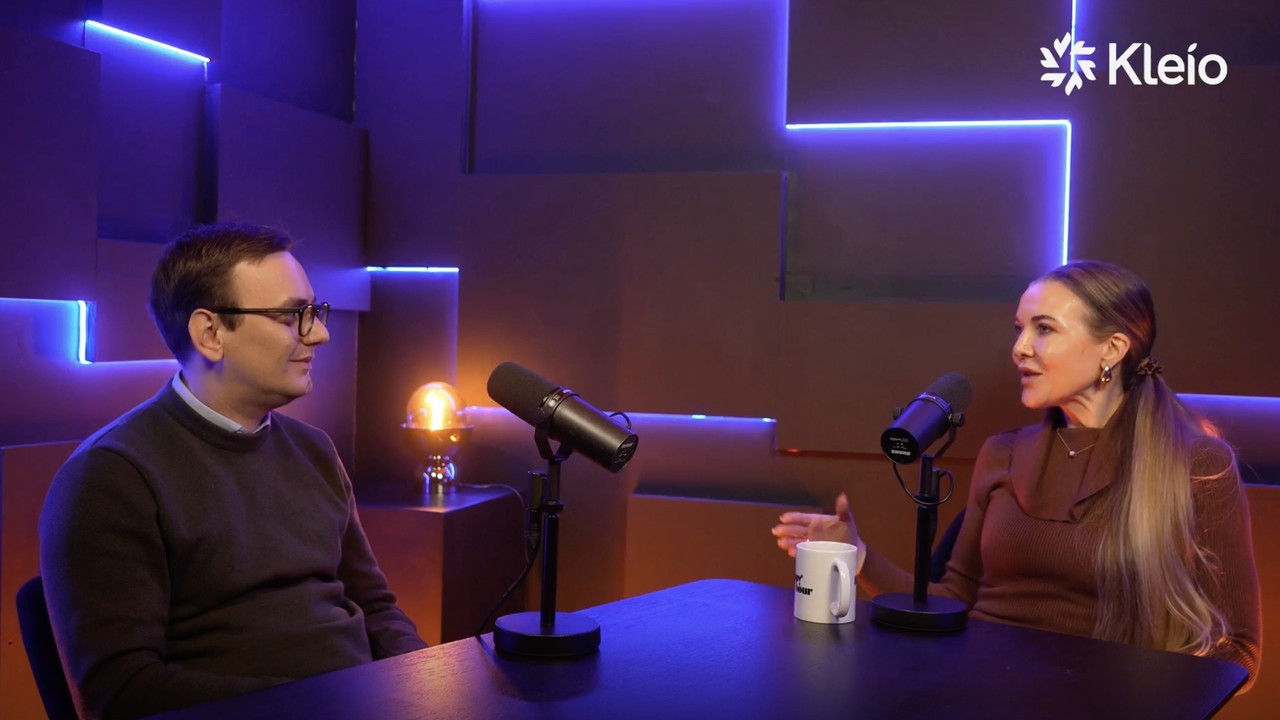
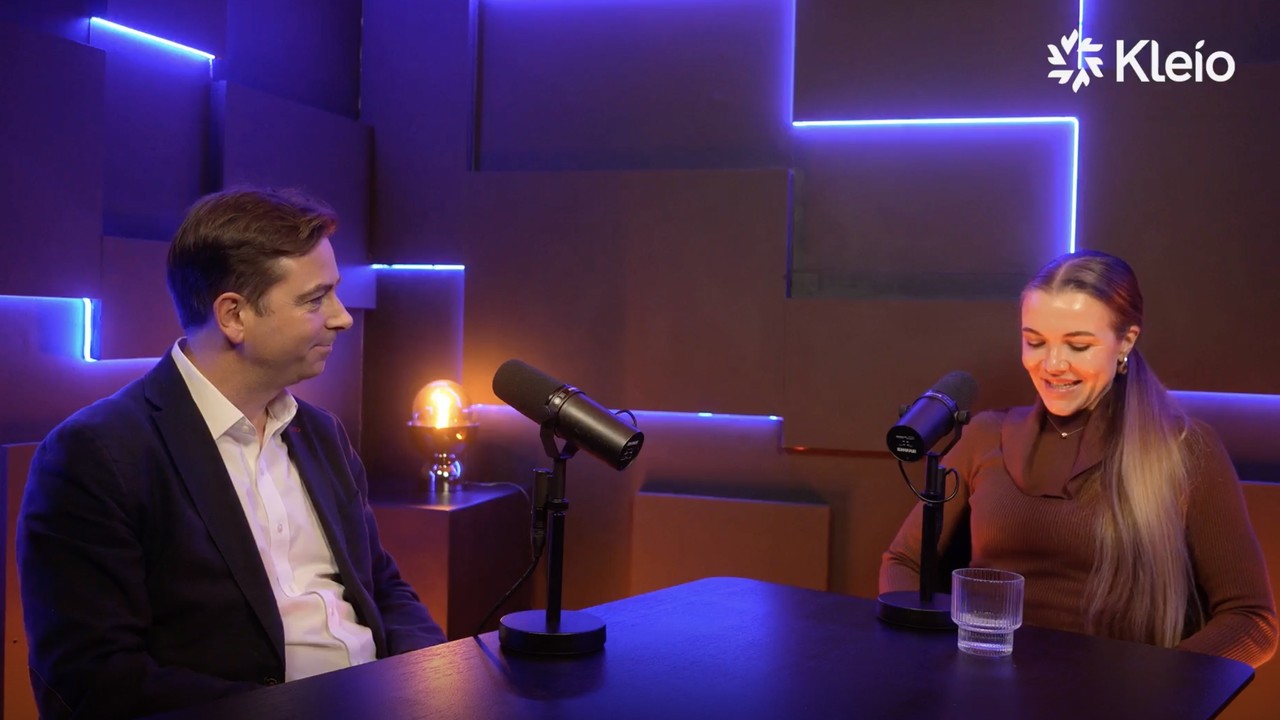
Conversation between Clara (host) and Philippe Wellens, co-founder and CEO of Kleio. The transcript has been lightly edited for readability.
How did Kleio start?
Clara: Philippe, tell me a bit about Kleio. How did you start?
Philippe Wellens: It all started with an observation: every 10 to 15 years or so, there is a massive shift in the way people buy. It started with the Internet, then mobile apps, and more recently ChatGPT and this type of AI. Having worked at C3 AI in the AI space for many years, we realized that the way brands operate is not sustainable with that.
If you think about it, a brand has a ton of data about its products, about its customers, about the way it sells. And all of that is compressed into a very thin layer, mostly aesthetic: a website or an app. So we thought: this needs to change, and it can change with conversational AI, with agentic AI.
From our experience, we also knew we had to go where the data was. So we went straight into websites, because that's where you learn the fastest. Very quickly we had a ton of real conversations with end users, a lot of data to feed the AI, and a big impact. Today, 100 million conversations later, we can take that same AI agent that used to live on a website and put it into a personal AI agent, to start the conversation between two agents: one representing the buyer, the other representing the brand.
Which brands work with Kleio?
Clara: Now that you've told me what Kleio does, who are you working with? Which brands already use Kleio?
Philippe Wellens: We work with some of the leading groups in the complex industries we serve. In real estate, it's Orpi, a very large network of 1,250 agencies. In automotive, it's Emil Frey, a large dealership network with a big footprint in Europe. In travel, to name just one, Contiki, part of The Travel Corporation, which is present in North America, Europe and Australia. With groups like these, the impact is large and grows over time: we typically see two to three times the conversion rate in a conversation compared with a website or any other channel.
Why is Kleio's impact measurable?
Clara: What stands out is how measurable this impact is. A lot of solutions make it hard to quantify how much they boost transactions or conversions.
Philippe Wellens: It's one of the reasons we started there. It's very easy to tell whether you're doing it right or wrong. You can measure it, and within a day you can see how the conversion rate is moving and whether you're doing a good job. If you're not, fine: you learn from it, you improve and you fine-tune.
What do ChatGPT and Meta Muse change for brands?
Clara: As you said earlier, people now often prepare their purchases with ChatGPT or Meta Muse. What does that change for brands?
Philippe Wellens: Almost everything. The buying decision and the preparation no longer happen on the website, or on the channels the brand uses and masters. They happen upstream, in a new type of conversation: agentic AI. This new channel will get more and more traffic and use, because the experience is so much better than elsewhere. So traffic to brand websites and other channels will decrease over time.
As that happens, whoever is not part of the conversation is missing out. The brands that are part of it will see personal AI agents coming back to their connectors, because those connectors are available and answer properly, fast and precisely, whatever the question.
What should brands do now?
Clara: In this rapidly changing ecosystem, what should brands do?
Philippe Wellens: They have two options. They can sit back, wait and watch their traffic and revenue slip away, probably faster than they expect. Or they can act today. Acting means having their own brand AI agent present in this new channel, inside personal AI agents, one that really represents the brand: it sells the way the brand sells, it provides trust and guidance like the brand's very best advisor, it recommends products and it remembers buyers. That's what brands should be doing today to get a new seat at the table and capture this new channel.
Will brands face the same intermediaries again?
Clara: Large aggregators and portals are already very present in these personal AI agents. Will brands face the same intermediaries all over again?
Philippe Wellens: It's a key risk, definitely, and I would not be blind to it. The good news is that there is a way to win against the intermediaries, because everyone is starting from scratch. It's all new: the technology doesn't fully exist yet, we're building it as we speak, and the cards are being redistributed. If brands partner with the right company and the right infrastructure, they can be there by being better at what they recommend, at how they guide users, at remembering buyers and adding value, and by converting more across all these channels.
If they just let the big intermediaries do their thing, which is already happening (some of the big names in travel, real estate, automotive and retail are positioned as launch partners of ChatGPT, Meta Muse and the like), they'll eventually manage, because they have the people and the tech, but they'll be catching up. And when you play catch-up, you have to work much harder, because first movers have a compounding advantage: a connector that works well gets reused and attracts more traffic. Whoever isn't there is missing out.
Why does Kleio focus on complex customer journeys?
Clara: Kleio focuses on industries with complex customer journeys, where the purchase is more than "do I want this, yes or no?" and many factors come into play: automotive, real estate, travel. What's the strategy behind that choice?
Philippe Wellens: It's simply because that's where buying is hardest. When you want to buy a car or an apartment, or go on a trip with your family, these are big decisions and big budgets, with lots of micro-decisions and a bit of anxiety. That's where guidance has the most value. We started there with the bet that if we master complex purchases, everything else gets easier. That's also why we're now moving into complex retail: that's where the next opportunity lies.
How do you scale an AI company today?
Clara: Last question, about scaling. From your experience at previous AI companies, what's your advice on how to scale in the current ecosystem?
Philippe Wellens: It's a complex ecosystem to navigate and there's a lot of buzz. I'd say it comes down to three things. First, get something into production quickly and learn from there. We've all heard the stories about the graveyard of prototypes that never reach production. That's how you learn and that's how you grow.
Second, you need a product, not a project. Every time you go live, every time you deploy, you bring what you learned back into the product and the platform, so the next deployment is faster and better. You get a compounding effect over time.
Third, people. You need the right people, especially today. Scaling was already fast in the past, we all lived it at C3 AI through the IPO, but AI amplifies it. You need people who are ready to reinvent themselves, because jobs are changing faster than before, and who have that agentic behavior: they jump on different things, find solutions and get things done. Today it's even more about execution.
A concrete example: planning a solo trip
Clara: Concretely, as a buyer: say I'm traveling solo to a destination I've never been to. I want something relaxing with a beach, but not too isolated because I'm on my own, and not too noisy, maybe no kids. Is that what Kleio helps me with? I chat and fine-tune it with the agent?
Philippe Wellens: That's exactly right. Everything you just mentioned is an intent you typically can't enter into a search bar with filters and drop-downs, but Kleio can capture it. You speak in your own words and the AI understands you, like the very best sales advisor, who asks you the right questions at the right time. You feel heard and guided, you feel someone is there for you, so you start to trust that brand agent. And that leads to a better outcome: you find the trip you're looking for, exactly the way you want it. That's what we do at Kleio.
Clara: Thank you so much, Philippe.
Philippe Wellens: Thank you, Clara.
Watch the other episodes
This conversation is part of Kleio's video series, in which the three co-founders, Philippe Wellens (CEO), Adrien Mathieu (President) and Louis Poirier (CTO), share their journeys and their view of agentic commerce. All episodes are available on the Kleio YouTube channel.