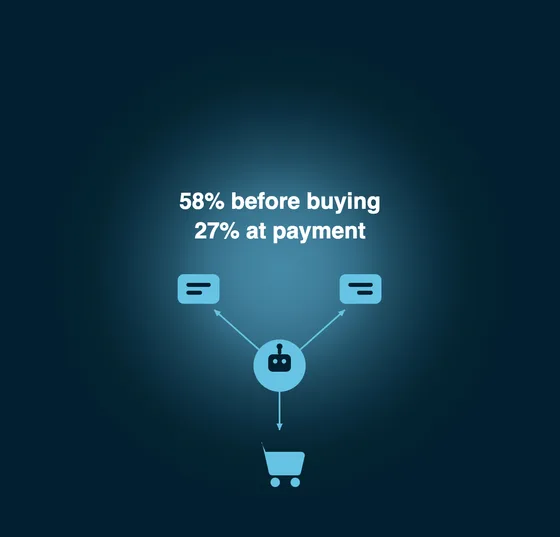


AI-referred traffic to US retail sites rose 693% over the 2025 holiday season (Adobe Analytics). Yet 54% of consumers who shop with AI double-check every answer (Gartner). AI shopping assistants guide the customer through the buying journey and hand over to customer support. This guide explains how an AI shopping assistant works, which product data it needs and how to test its purchase advice.
What an AI shopping assistant is and how it works
What is an AI shopping assistant?
An AI shopping assistant is a digital shopping agent and virtual assistant powered by generative AI. It holds a conversation with the online customer in natural language to answer questions about a product. The assistant uses natural language processing and machine learning to run a relevant search in the product catalog and customer data in real time. Unlike traditional chatbots based on a script, this shopping assistant supports product discovery and personalized shopping. It improves the shopping experience, customer satisfaction and conversion rate. Its customer service handoff passes the conversation to support.
How do AI shopping assistants work?
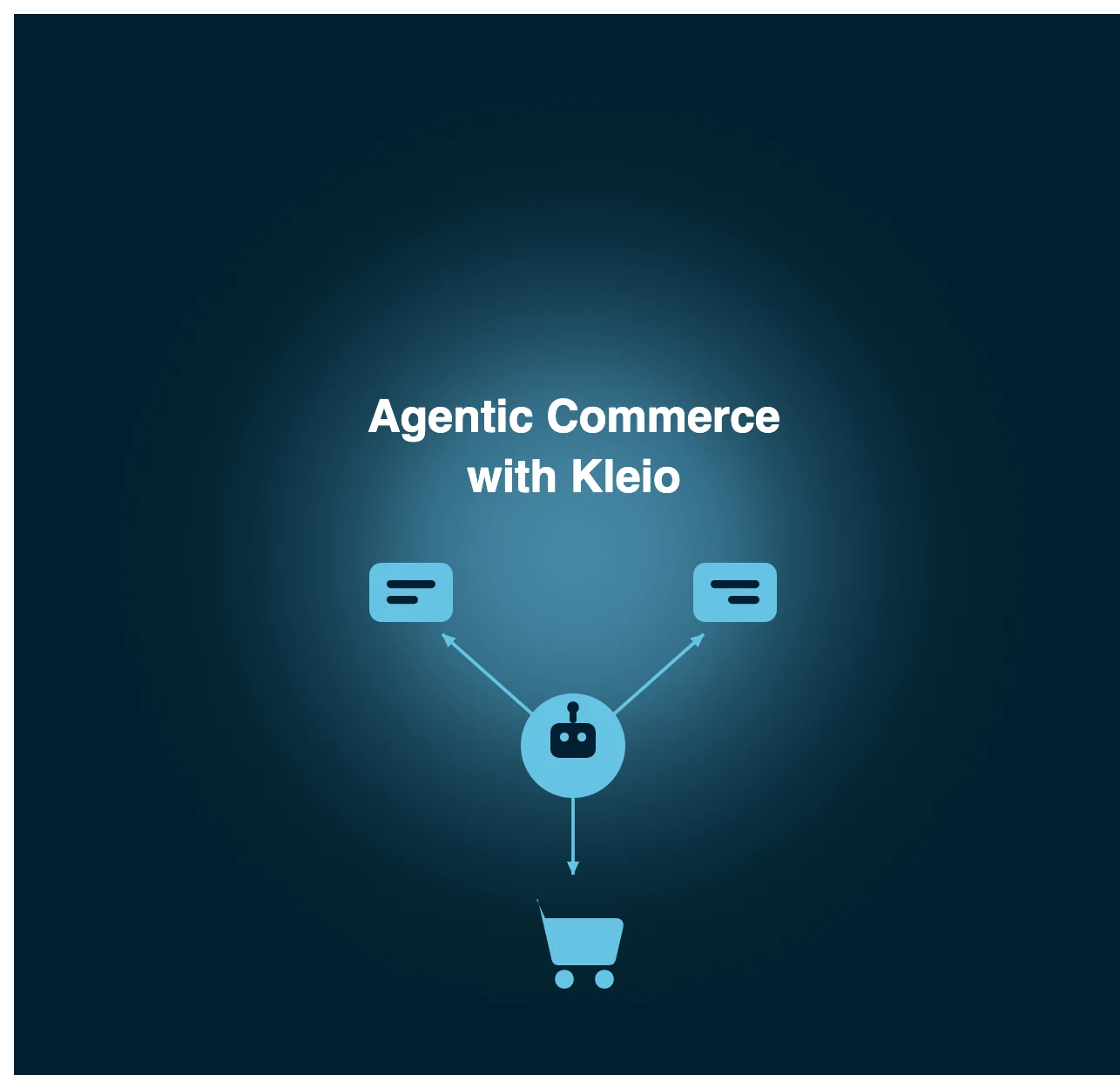
Every answer follows the same chain. The assistant detects the intent of the shopper and the context of the conversation. It then runs a quick search in your product data: attributes, prices, stock and return policy. Browsing behavior and purchase history sharpen the match. It builds a quick reply from what it found and nothing else. Finally it takes an action: show a product, add it to the cart or contact an advisor. The quality of each step depends on the product catalog behind it and on how well your team keeps that data current.
What technologies power AI shopping assistants?
Four layers sit under the live chat window. Natural language processing turns a shopper sentence into a structured request, so a customer types a need instead of a keyword. Large language models write the reply in a natural tone. Machine learning ranks products based on how shoppers react to them. A knowledge layer connects the model to approved data, which is called grounding. The model alone invents details. Grounding forces the answer back to your data. Models change fast and this stack stays the same. Artificial intelligence alone does not make an answer accurate.
AI shopping assistant versus chatbot and site search
A site search matches keywords. A scripted chatbot follows a decision tree built for support questions about orders and returns. A support chatbot is useful there but it does not guide a purchase. An AI shopping assistant reasons over a goal such as a budget, a trip or a family size. The difference between traditional chatbots and shopping assistants is covered in our guide to AI chatbots for ecommerce. Here the question is wider: which kind of conversational assistant fits your range? Conversational commerce started with scripted flows and today reasons over context. The tone still has to fit each brand.
One catalog, two storefronts: on-site assistants and consumer shopping agents
Why shoppers now start their search in an AI assistant
Adobe measured a 693% year-over-year increase in AI-referred traffic to US retail sites between 1 November and 31 December 2025. That traffic converted 31% better than other sources. The base is still modest but the direction is clear. Amazon reports that its assistant Rufus was used by more than 300 million customers over 2025 and delivered close to $12 billion of incremental annualized sales (FY2025 results). Product discovery is moving into assistants you do not own. Our view on agentic commerce explains why this shift matters for complex sales.
On-site assistant or consumer shopping agent?
Two fronts now compete for the same shopper. The on-site assistant lives on your website and in your mobile app. You control the data, the tone, the rules and the handoff to your advisors. Most of these sessions now start on a phone, which shortens every question the shopper is willing to type. A consumer shopping agent such as ChatGPT, Gemini, Perplexity or Rufus lives elsewhere. It answers with whatever product data it can read. You control only the information you expose. A brand needs both fronts because a customer may start in one and finish in the other. Each channel must deliver the same facts: the same price, the same stock and the same conditions.
One governed product catalog feeding both fronts
Both fronts depend on the same asset: a structured, current and governed product catalog. Data management is the shared foundation. Standard protocols now make that asset readable by agents. MCP connects a model to your tools and data. UCP, the Universal Commerce Protocol announced by Google at the NRF in January 2026 with Shopify, Etsy, Wayfair, Target and Walmart, covers discovery, checkout and after-sales. It runs on REST, A2A and MCP. If your data is wrong, both assistants repeat the error and every channel multiplies the friction for the customer.
The diagram below shows the flow from one source to both fronts.
Read the diagram from left to right: the interface is the visible part and the data is the base. That is why the choice of an assistant is first a data decision. A brilliant interface on top of fragmented product data still gives wrong answers. The connector that sells directly in consumer assistants is described on the Kleio page for consumer AI assistants.
Benefits and limits of AI shopping assistants
What are the benefits of AI shopping assistants?
The AI shopping assistant benefits fall into five areas: higher conversion rate, larger baskets, answers at any hour, better lead qualification and less repetitive work for the customer service team. Each shopper gets personalized help at scale and a personalization engine alone cannot offer that dialogue. Amazon reports that customers who use Rufus are 60% more likely to complete a purchase. Treat that figure as a ceiling for a mature marketplace. Your own conversion gain depends on catalog complexity and data quality. Why use an AI shopping assistant at all? Because shoppers already ask questions that a filter cannot answer.
How can AI shopping assistants reduce cart abandonment?
An assistant helps reduce cart abandonment when it removes a doubt at the right moment. It can confirm a delivery date, check compatibility or explain an eligibility rule before checkout. It cannot recover visitors who were only browsing. Aim at the shoppers who hesitate because one answer is missing. That is where cart abandonment has a conversational cause. Cart recovery works best when the assistant removes friction instead of pushing a discount. Timing decides the result: an exit intent message that opens a conversation at the cart and checkout step. Each friction point you remove is a sale you keep. A friction log from your advisors shows where to start.
How do AI shopping assistants improve customer experience?
A good assistant improves the customer experience in three ways. It keeps the context and the contact history so the shopper never repeats a need. It adapts the tone and the level of detail to the person. It passes the full conversation to an advisor when a human is needed. Customer satisfaction and customer engagement rise when the shopper feels understood and not processed. The online shopping experience becomes a dialogue instead of a series of filters. Accuracy drives the satisfaction and tone drives the engagement. Measure the two separately.
Where assistants help most in the buying journey
Assistants help at every step but the value grows with complexity:
- Discovery: turn a vague need into a short list of products
- Product questions: check fit, compatibility or eligibility
- Complete the look: suggest add-ons that match the choice
- Returning customers: resume where the last session ended
About 60% of buyers do not know what they want at the start of a complex purchase. That is Kleio’s founding observation on travel, real estate and automotive. In these journeys guided discovery matters more than a fast answer. Our analysis of ecommerce product discovery sets out which lever answers which query type. The mechanics of ranking items are covered in our article on AI product recommendation.
Where AI shopping assistants go wrong
Trust is the weak point. In a Gartner survey of 846 US consumers (November to December 2025) 54% said they had to double-check all the information from GenAI tools and 62% said the output wasted their time. Only 11% accept that AI makes the purchase decision.
Most failures come from three causes. The first is a stale catalog, which turns every recommendation into a guess. The second is a broken constraint such as a budget or a date. The third is too many recommendations too early. Assistants rarely fail on language. They fail on data. A privacy gap is a fourth risk. Customer data must be protected before any call to an outside model. Your privacy policy has to state how.
How to measure whether an assistant is working
Set a baseline before launch. Then track the conversion rate of assisted sessions against unassisted ones, the average basket, the handoff rate and the share of answers traced to your catalog. Add attribution so revenue from assisted sessions appears in your analytics and tracking. Measure for a full buying cycle. A travel or property purchase takes weeks and a short test hides the real performance.
How to choose an AI shopping assistant
Three levels of assistant for three kinds of catalog
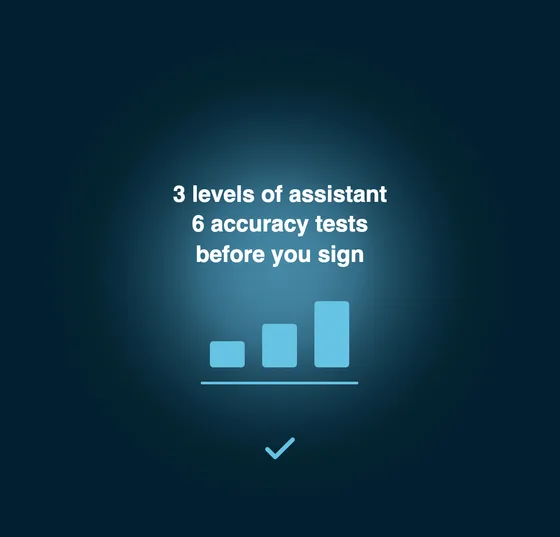
Choose the level before you compare vendors. Level one is a rule-based scripted support bot that answers frequent questions. Level two is an on-site discovery assistant with a product finder or a quiz. Level three is an agentic assistant backed by a knowledge layer: it holds several constraints at once and keeps memory across sessions. A range of low-consideration items rarely needs level three. A range of trips, homes or vehicles does. Many teams buy a support chatbot first and discover later that it cannot guide a complex purchase.
Which level does your catalog need?
Four answers place your catalog on the scale: basket size, length of the decision, number of constraints per recommendation and need for a human handoff. Use the selector below to see the level it points to. It also shows what that level does well and what it misses.
Treat the result as a starting point. The next sections explain how to verify it with your own data.
What features should an AI shopping assistant have?
Require these capabilities and test each one rather than take it on trust:
- Multi-constraint reasoning: budget, dates, availability and eligibility together
- Grounded answers: every fact traced to approved data
- Session memory: the context survives across visits
- Handoff with context: the advisor sees intent and constraints
- Integrations: commerce platform (Shopify or a custom stack), CRM, contact center, payment provider and inventory in real time
- Governance: versioned rules and access management per operation
- Analytics: reports on answer quality and conversion
Ask the vendor to demonstrate each one in a live chat on your own catalog. Compare every vendor on the same script and name one owner for the evaluation. Compare the answers side by side and compare the handoff too. Call a reference customer before you call sales, because fifteen minutes there reveals more than a brochure. Evaluation time is limited so choose the pilot scope with care.
What your product data must look like
An assistant cannot repair an inconsistent catalog. Complete the attributes then refresh prices and stock. Write down eligibility rules and policies in plain text. Customer reviews belong to that data too. An assistant that can quote a rating or a recurring comment answers the doubt a shopper actually has. Consumer agents outside your site read those same public reviews, so a thin review base weakens you on both fronts. Brand voice also needs a short written guide. Treat product content as an asset that your company maintains between releases. This work decides the result more than the choice of model, and it is where most of the project resources go. Name an owner for product data and another for the knowledge base. Plan the change management too because advisors must trust the tool. Budget writing time and training time for this work. It is the reason Kleio says it solves the data problem first.
Which AI shopping assistants are best for ecommerce?
The best assistant depends on how complex your purchase is and on which digital channels your customers use. A store that sells low-consideration items can reach good results with a level two product finder. A brand that sells trips, homes or vehicles needs reasoning over constraints. Compare vendors on four points: accuracy on your product data, quality of the handoff, speed of deployment and data governance. A ranked list of tools cannot replace a test on your own data. A comparison only holds when every vendor answers the same script. The names that top a list built for Shopify stores are rarely the right fit for a complex range. Ask whether the vendor runs a managed service or leaves operations to your team. Ask each one for a quick pilot on a sample of your range and keep the same questions throughout.
Cost, setup time and build versus buy
Cost depends on three items: license, integration work and data preparation. The third one is often the largest and the least budgeted. Setup time ranges from days for a plugin to several months for a custom build. Building in-house gives control but demands an engineering team for data, evaluation and monitoring. An enterprise project also needs a security review and legal sign-off before launch. Compare the full cost of ownership over three years and weigh it against the cost of doing nothing. Kleio has no public pricing and goes from kickoff to production in 8 to 12 weeks.
Accuracy scorecard: six tests to run before you sign
Run these six tests on a pilot before any contract. Thresholds are indicative.
In short, test the accuracy on multi-attribute queries and count every constraint violation. Time the response and trace each fact to its source. Read the handoff your advisors receive and check that stock and price are fresh. Kleio uses 99% precision, sub-3-second responses and zero hallucination on approved data as its own reference levels.
How Kleio handles complex, high-consideration catalogs
A Knowledge Engine instead of a prompt
Kleio does not rely on a prompt placed on top of a store feed. The Knowledge Engine spreads your data across three purpose-built stores for product, document and memory. A separate layer handles configuration and governance. Agents answer only from approved data so the platform reaches 99% precision with sub-3-second responses and zero hallucination. Sensitive fields are pseudonymized before any call to an external model, which protects customer privacy.
Agentic Orchestration on a Triple Business Ontology
The platform orchestrates thousands of AI agents that work together on a sales conversation. The Agentic Orchestration layer deploys, versions and routes them. Each agent reasons over a Triple Business Ontology with a layer for function, industry and customer. Travel is not automotive and real estate is not wholesale. Seven industries come with a pre-built ontology that adapts to your data model in weeks.
Proof on high-consideration sales
Orpi chose Kleio for its real estate search: the platform went live in three months on Orpi.com and across 1,250 agencies serving 8,000 advisors. Havas Voyages and Selectour use Kleio for travel advisors and customers. Altarea Cogedim relies on it to absorb the complexity of financing schemes and a rich offer. These companies deploy one platform for lead generation and for advisor productivity. These are the purchases where shoppers do not know what they want at the start.
Reaching shoppers inside AI search with MCP and UCP
Kleio exposes your product catalog to AI search engines through MCP and UCP, so recommendations reach shoppers in ChatGPT or Gemini with the same governed data as your site. McKinsey estimates that agents could orchestrate up to $1 trillion of US B2C retail revenue by 2030 and $3 trillion to $5 trillion worldwide. The architecture is detailed in our article on MCP and A2A for enterprise AI search. To see it on your own data, request a demo and contact the Kleio team.