

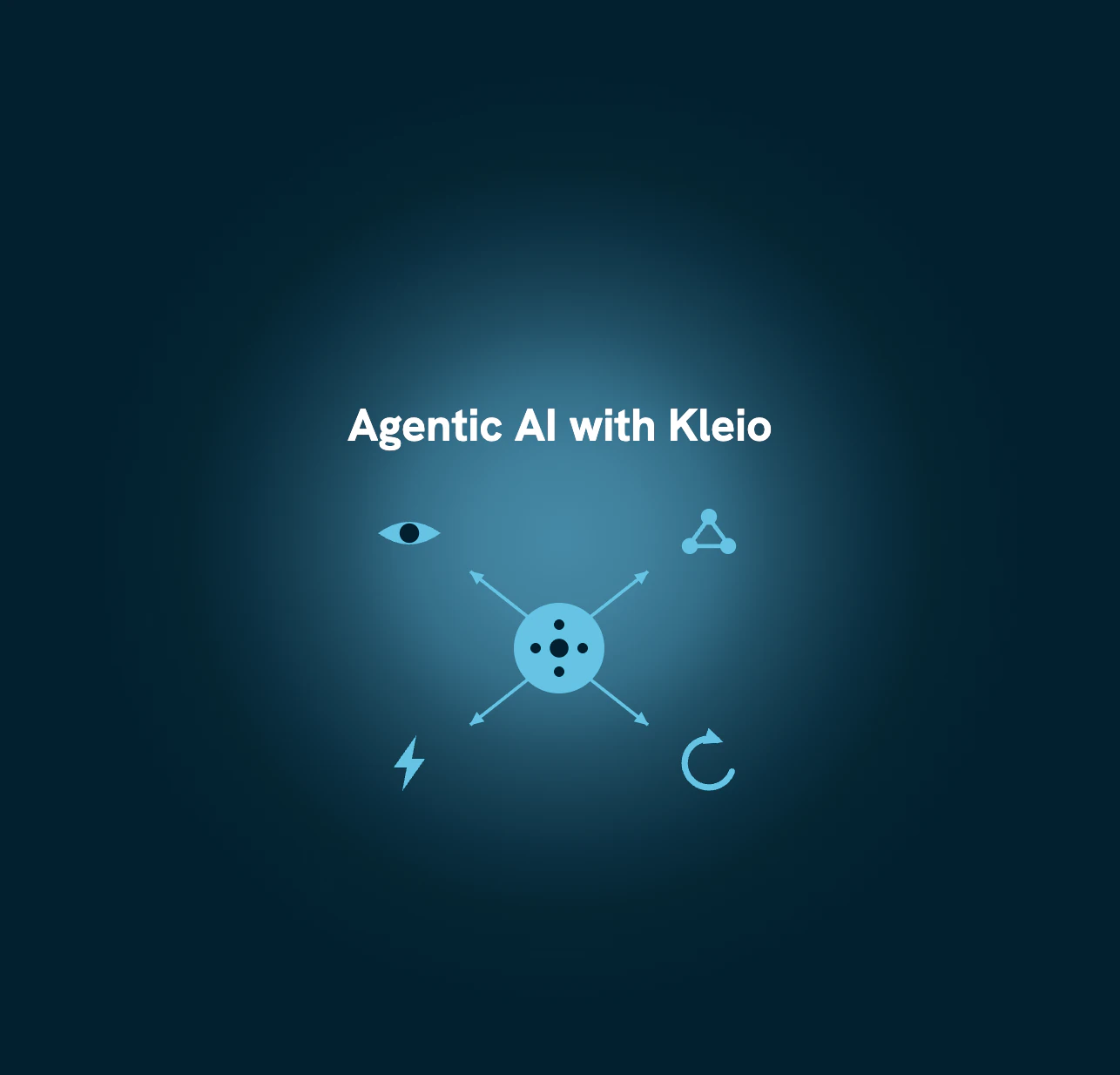
Gartner predicts that more than 40% of agentic AI projects will be canceled by the end of 2027 and the reason rarely comes down to the technology itself. This guide keeps agentic AI explained in plain terms for any complex business or customer service organization: what is agentic AI, how does agentic AI work through autonomous agents and intelligent agents that coordinate agentic workflows under minimal human intervention rather than constant human oversight and where the clearest agentic AI use cases already deliver measurable security and support value at scale.
What Is Agentic AI? (Definition and How It Compares)
Defining Agentic AI in One Sentence
This section helps readers learn how each task gets automated inside complex workflows and how machine learning, artificial intelligence and human intelligence divide the work in close collaboration. The next generation of agentic systems automates decisions once handled manually, at every level of performance and across global markets. That distinction matters because deployment experience and direct contact with buyers tell a different story than theory alone, building a shared understanding of what customer experience at scale actually requires. An innovation only counts once it can perform reliably on cloud infrastructure outside a demo, automate the boring parts and turn one good experience into a repeatable one that a whole team can perform again the next week. Agentic AI is a category of artificial intelligence systems that pursue a goal autonomously by perceiving data, reasoning about the best path forward and executing actions through connected tools rather than waiting for a human to trigger every step. That single trait, autonomous execution, separates agentic AI systems from conversational assistants and copilots that only respond when prompted. A useful test: if the system can complete a multi-step task without a human clicking "next" at every stage, it qualifies as agentic. What is agentic AI in practice, then, comes down to a system that owns a workflow end to end instead of assisting one step of it. The agentic AI functionality that matters most in production is not the underlying model but the agentic AI architecture wrapped around it, the perception, planning, action and reflection loop covered next, which is exactly the agentic AI process most vendor pages describe in the abstract without showing how it behaves under real enterprise data and real software workloads.
Agentic AI vs. AI Agents: What's the Difference?
An AI agent is a single unit, one instance built to handle a defined task such as answering a support ticket or qualifying a lead. Agentic AI is broader: it describes the orchestration layer that coordinates many intelligent agents, routes work between them and manages how they collaborate on a shared goal. Think of an intelligent agent as a specialist and agentic AI as the operating model that turns a roster of specialists into a coordinated team capable of handling complexity no single agent could resolve alone.
The Core Traits That Make an AI System "Agentic"
Four traits distinguish an autonomous agents architecture from a scripted assistant:
- Goal orientation: the system pursues an outcome across multiple turns, not just a single reply
- Planning: it breaks a broad goal into an ordered sequence of steps before acting
- Tool use: it calls external systems, APIs and data sources to act rather than merely describe
- Memory: it retains context across a session and improves through agentic workflows over time
None of these traits alone makes a system agentic. A tool that remembers context without planning is a better conversational assistant, not an agent. It is the combination, held together in a continuous loop, that defines the category and the next section walks through exactly how that loop operates.
Generative AI: Creating Content, Not Acting on It
Generative AI produces text, images or code from a prompt using a language model trained to predict the most likely output. It stops there. A generative system can draft a proposal but it cannot check inventory, update a CRM record or send that proposal to the right buyer. Language models are the reasoning engine many agentic systems rely on but on their own they generate content rather than complete a business process.
Rule-Based Automation: Rules Without Reasoning
Rule-based automation executes fixed instructions against structured inputs through process automation and workflow automation scripts. A bot clicks the same button in the same field every time, regardless of what changed upstream. It is fast and predictable within its narrow scope and it breaks the moment a step changes or a decision requires judgment. A scripted bot cannot decide, it can only replay a sequence written in advance. That rigidity is exactly what agentic AI is built to overcome: instead of a fixed path, an agent evaluates the current situation and chooses among several valid responses rather than failing silently when reality drifts from the recorded workflow.
Agentic AI: Autonomous Reasoning and Action
Agentic AI adds the missing layer: reasoning under uncertainty followed by action through tools and API management rather than a fixed script. It evaluates the situation, chooses among several valid paths and executes through the systems it has access to, checking its own output against the goal before moving to the next step. Where a generative model stops at a draft and a scripted bot stops at a broken rule, an agentic system keeps working the problem until the goal is reached or a human is explicitly looped in. This is why enterprise teams increasingly evaluate agentic AI platforms and agent frameworks as infrastructure decisions rather than point-solution purchases, closer in scope to choosing a database than to picking a conversational AI vendor.
Agentic Commerce: Agentic AI Applied to Complex Sales
Agentic Commerce narrows agentic AI to one demanding context: complex, high-value sales marketing cycles where a buyer moves through discovery, configuration, pricing and approval before converting into a signed transaction. That context covers any high-consideration purchase where the buyer starts undecided and the catalog is too large to browse: travel, real estate and automotive retail on the consumer side, wholesale and manufacturing on the business side. What those cycles share is not who the buyer is but the shape of the decision. Every transaction in that cycle carries its own cost of delay, and the platform's job is to shrink that cost at each step rather than only at checkout. This is where the comparison below becomes concrete.
The last row is not a generic claim. It reflects a deployment pattern already proven in production: platforms built specifically for agentic AI in business contexts such as complex, high-value sales compress a build cycle that otherwise takes months of internal engineering.
How Agentic AI Works and Where It Delivers Value
Step 1 - Perception: Reading Signals Across Systems
Every agentic loop starts with perception: the system reads real time data from CRM records, product catalogs, support tickets or conversation history and normalizes it into a format the reasoning layer can actually use. Without unified data sources, this step fails silently: the agent reasons on partial information and produces a plausible but wrong answer, which is often harder to catch than an obvious error because it looks correct on the surface. Perception quality sets the ceiling for everything that follows in the loop, which is why data unification consistently ranks as the first blocker enterprise teams encounter.
Step 2 - Reasoning and Planning: Turning Goals Into Steps
Once the system perceives the situation, it plans: it breaks a broad goal into an ordered set of steps, weighs tradeoffs and selects a path before touching a single system. This is where large language models contribute reasoning capability, converting an ambiguous instruction such as "help this buyer configure the right product" into a concrete, ordered decision sequence, step by step, that the system can execute. A well-designed planning stage also decides when it does not have enough confidence to proceed and should escalate to a human instead of guessing.
Step 3 - Action: Executing Through Tools and APIs
Action is what separates agentic AI from a conversational assistant. The system does not just describe what should happen, it calls the tools needed to make it happen: it can execute tasks against a CRM, trigger a quote engine or reach external tools through API management layers, then verify that the call actually succeeded before reporting completion. This is the step that turns reasoning into a business outcome rather than a suggestion and it is also the step where governance controls matter most, since an agent that can act is an agent that can act incorrectly at scale.
Step 4 - Reflection and Learning: Improving With Every Interaction
After acting, a well-built agentic system evaluates the outcome and adjusts. Continuous learning closes the loop: the system refines its next decision based on what worked, often supported by reinforcement learning techniques that reward successful paths over failed ones and quietly downgrade patterns that led to a poor outcome. Without this step, the same mistakes repeat indefinitely instead of shrinking over time, which is one reason a system that looked strong in a demo can still underperform months into production if reflection was never built in.
Customer-Facing Agents: Discovery, Recommendations, Conversion
The first surface where agentic AI creates value sits directly in front of the buyer and it is one of the clearest agentic AI use cases to measure. Close to 60% of buyers do not know precisely what they want when they start a purchase journey, which is why guided discovery and customer service agents that ask the right qualifying questions convert better than static catalogs or search bars. Customer support agents that reason across product attributes, price and availability replace a frustrating search with a guided conversation, learning from every accepted or rejected recommendation to refine the next one.
Employee-Facing Agents: Sales and Service Copilots
The second surface sits behind the counter: agents that give sales and service teams a unified view of customer, product and pricing data inside one conversational cockpit. Salesforce reports that its own agents handle around 32,000 customer conversations per week with an 83% resolution rate, having halved escalations so that only 1% of customers still need to reach a human (source: Salesforce, Agentforce customer zero). That is a concrete signal of what software development investment in agentic copilots returns once business processes are properly instrumented.
AI-Agent-Facing: Connecting to AI Search Engines via MCP
The third surface is newer and less discussed: exposing a product catalog directly to AI search engines such as ChatGPT or Gemini through the Model Context Protocol (MCP). This lets an external LLM query a company's own agent platform in natural language and surface accurate, high-intent recommendations instead of guessing from public web content. Few vendors treat this as a managed service today, which makes it an early-mover opportunity rather than table stakes and a preview of where applications of agentic AI are heading as AI search grows into a real acquisition channel.
Benefits of Agentic AI and Is Your Organization Ready?
Higher Conversion on Complex Catalogs and Journeys
Complex catalogs punish indecisive buyers with too many options and not enough guidance. A static filter panel assumes the buyer already knows the right attributes to search on, which is rarely true for high-consideration purchases. Agentic AI raises agentic AI benefits into measurable conversion gains by narrowing choices through a guided, adaptive conversation instead of a static filter, asking one clarifying question at a time and adjusting recommendations as the buyer reacts, one of the clearest agentic AI features enterprise buyers ask about first.
Sales and Service Teams Freed From Repetitive Tasks
Administrative work, updating records, researching accounts and scheduling meetings, consumes a large share of a sales team's week, time that never shows up on a pipeline report but directly limits how many accounts a rep can actually work. Task execution at scale is achievable once workflows are designed with minimal human intervention on the repetitive steps, which frees sellers to spend the reclaimed hours on the conversations only a human can close.
Faster Time-to-Value Than Building In-House
Building an agentic stack from scratch means months of internal engineering before the first production win and most of that time goes into problems that have already been solved elsewhere: data modeling, permissioning and orchestration plumbing rather than anything specific to the business. A verticalized platform with pre-built agentic AI deployment and agentic AI integration patterns compresses that timeline because the data model, governance and orchestration layer already exist for the target industry rather than being designed from zero, leaving internal teams to focus effort on what actually differentiates their offer. Every month spent on plumbing instead of the product is a direct cost, and every delayed transaction during that build phase is revenue the sales team never recovers.
What to Measure in the First Year
The Data Problem Behind Most Failed Agentic AI Projects
The pattern behind most cancellations is not a broken model. It is fragmented data: product, customer and pricing information scattered across systems that no agent can reason over reliably. This is the agentic AI risks and agentic AI limitations conversation vendor pages rarely have, because most of them are trying to sell the technology rather than diagnose the readiness gap underneath it.
Take the Agentic AI Readiness Diagnostic
Before reading another vendor pitch, it is worth finding out where the organization actually stands. The six questions below take less than two minutes and mirror the exact gaps Gartner ties to canceled projects.
Gartner expects 40% of enterprise applications to feature task-specific AI agents by the end of 2026, up from less than 5% in 2025 (source: Gartner, August 2025). This diagnostic exists precisely because adoption is accelerating faster than most agentic AI management practices are maturing to support it.
What Your Score Means - And What to Do Next
- Mostly "yes": your data and governance foundation can likely support a scaled deployment and the next step is choosing the first use case with the clearest, most measurable outcome
- A mix of "yes" and "no": start with one well-scoped use case before expanding further and treat the gaps you identified as the actual project plan rather than background risk
- Mostly "no": prioritize data unification and governance before evaluating any platform, since no amount of orchestration sophistication compensates for fragmented underlying data
A low score is not a reason to abandon agentic AI. It is a signal to sequence the work correctly, data first, orchestration second, scale third, the same order Gartner's cancellation data points back to when it identifies data and governance gaps as the real cause of failed projects rather than the technology itself. Among the clear advantages of agentic AI once that sequencing is respected: fewer manual handoffs, faster quote cycles and a system that keeps improving instead of drifting. The future of agentic AI belongs to the organizations that treat this diagnostic as a starting checklist rather than a one-time formality.
Risks, Governance and How to Implement Agentic AI
Hallucinations and Loss of Control
An agent that reasons over incomplete or contradictory data can confidently execute the wrong action, not just describe one, which is a fundamentally different failure mode than a conversational assistant giving a bad answer. This is one of the recurring challenges of agentic AI that a demo never surfaces, because a scripted demo never feeds the system the contradictory or incomplete records that show up in a live enterprise database. The gap between a working pilot and a scaled deployment traces directly back to unresolved human oversight and human intervention design choices, left until too late in the project rather than settled at the architecture stage.
Data Privacy and Tenant Isolation
Agentic systems that touch customer and pricing data need strict boundaries between tenants, especially when a single platform serves multiple business units or client organizations that should never see each other's data. Connecting enterprise systems and external systems without clear isolation multiplies the blast radius of any single error or breach, since one misconfigured permission can expose far more than the incident that triggered it. These are the concerns of agentic AI that security teams raise first, and the drawbacks of agentic AI that get cited most often by skeptical CIOs, which is why data privacy and tenant isolation belong in the architecture from day one rather than bolted on afterward.
The EU AI Act: What Actually Applies From August 2, 2026
Governance is not only an internal discipline anymore, and the calendar has moved. The obligations that land on August 2, 2026 are the enforcement powers over general-purpose AI models and the Article 50 transparency duties. The high-risk obligations originally set for that same date were pushed to December 2, 2027 by the amendments adopted on June 16, 2026, which buys planning time rather than removing the requirement.
Few vendor pages track these dates accurately, which makes the distinction between the two tiers one of the most misreported planning inputs for any enterprise digital transformation roadmap involving agentic systems.
Building Governance Into Agentic AI From Day One
Step 1 - Assess Data Readiness and Define Goals
Before selecting any platform, map where product, customer and pricing data live today and what gaps stand between that reality and a unified system an agent can reason over. This audit is deliberately unglamorous, spreadsheets and system inventories rather than demos, but it is what separates the teams that scale from the teams whose pilot never leaves the sandbox. Pair this with data analytics grounded in data science rigor rather than assumption and define the specific business outcome the first use case must hit before writing a single requirement.
Step 2 - Select a Verticalized Agentic Platform
Generic agentic AI platforms built for no industry in particular require months of custom configuration before they understand your product catalog or sales process, because someone has to teach the system what your business even means by "product" or "deal". A platform pre-built for your industry starts from a working data model instead of a blank one, which shortens the distance between kickoff and a live deployment and reduces the number of decisions your team has to make correctly on the first try. Cost discipline matters here too. A platform that needs months of custom implementation before the first real transaction closes rarely survives a budget review, especially once the economic case depends on proving value fast. Teams in supply chain and wholesale, where margins stay thin, cannot afford to resolve basic integration issues a full fiscal year into the contract. A proactive vendor ensures the implementation plan adapts to the surrounding business environment rather than forcing the organization to adapt to the software, and treats the partner network as an extension of the internal team instead of an external resource kept at arm's length.
Step 3 - Govern, Scale and Measure
Launch narrow, measure against the outcomes defined in Step 1, then expand deliberately rather than all at once. Ensure that operations, network access and shared resources are monitored the same way across every new use case, so a partner team scaling the platform inherits a system that is predictable to operate rather than a patchwork of one-off configurations. Large production estates never appear in a single release, they compound from disciplined, measured expansion, which is a pattern worth replicating over a rushed, all-at-once rollout.
Agentic AI for Complex, High-Value Sales - The Kleio Approach
The Knowledge Engine: Solving the Data Problem First
Kleio's Knowledge Engine exists to solve exactly the fragmentation problem behind most failed agentic AI projects described above. Rather than pointing a language model at scattered systems and hoping for the best, it distributes product, document and memory data across three purpose-built stores with a governance layer that sits apart from the reasoning layer, delivering 99% precision on queries with sub-3-second response times and zero hallucination by design. That separation between data and reasoning is what turns an impressive demo into a system enterprise buyers can trust with a live quote.
Triple Business Ontology: Verticalized for Seven Industries
Instead of a generic model retrofitted to any sector, Kleio's Triple Business Ontology pre-builds function, industry and customer layers across seven verticals: Travel & Hospitality, Automotive, Real Estate, Wholesale, Manufacturing, Insurance and Energy & Utilities, each with its own supply chain logic and negotiation pattern. Each ontology encodes how that specific industry actually structures a deal, an insurance quote is not built the same way as a travel booking or a wholesale order, so the reasoning layer starts already fluent in the vocabulary and constraints of the business it serves. Travel is not Automotive and Real Estate is not Wholesale, which is exactly why a single generic ontology cannot serve all of them equally well and why generic platforms need months of configuration that pre-built verticals skip entirely.
Agentic Orchestration at Enterprise Scale
Agentic Orchestration deploys, versions and routes thousands of collaborating AI Agents across complex sales workflows, governed by SOC 2 compliance, tenant-isolated architecture and per-operation role-based access control. Every agent action is versioned and auditable, which means the governance discipline described earlier in this guide, named owners, logged decisions, fixed review cadences, is not left to each customer to build on their own. This is the governance layer the earlier sections of this guide described in the abstract, built into the platform rather than added as an afterthought once a security review flags the gap. It is also the layer that lets a network of regional teams resolve disputes about who approved what, ensure that every key decision includes an audit trail, and resolve escalations without waiting on a single central administrator to unblock the queue.
Proof in Production: Havas Voyages, Selectour, Orpi, Altarea Cogedim
"In three months, we kept our commitment: the platform is live, on Orpi.com and in each of our1,250 agencies. It leverages the immense richness of our data to better serve our clients and our 8,000 advisors." - Guillaume Martinaud, CEO, Orpi